
Have You Checked Florida’s Treasure Hunt Lately? You Might Have Money Waiting for You
Every year, I like to share this as a simple reminder for friends and family across Florida: take a minute and search Florida’s official unclaimed property website, FLTreasureHunt.gov. The site is managed by the Florida Department of Financial Services, Division of Unclaimed Property, and it helps people find money or property that may have been forgotten, lost, or left inactive over time.
Unclaimed property can come from many places, including old bank accounts, uncashed checks, insurance proceeds, refunds, deposits, credit balances, stocks, dividends, and even contents from abandoned safe deposit boxes. These assets are typically turned over to the state after a business or government agency has been unable to reach the owner for a period that is usually about five years.
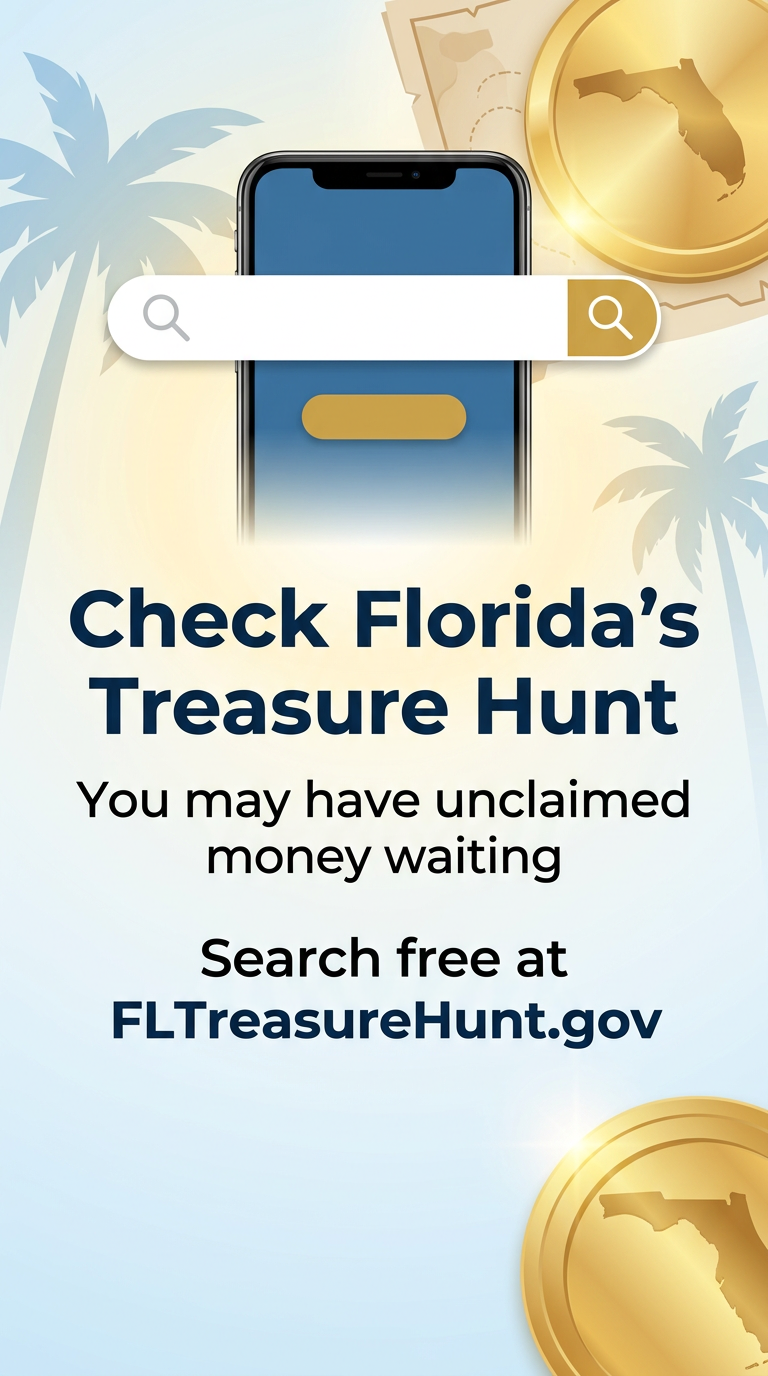
What makes this website valuable for Floridians is that it gives the public a free, searchable online database that is available 24 hours a day. If a match appears, users can start the claims process directly through the site and follow the instructions for submitting the documents needed to prove ownership.
This is an important service for the state of Florida because it helps return lost assets to the people who rightfully own them rather than letting those funds disappear forever. Florida also states that there is no statute of limitations on unclaimed property, which means owners or their heirs can claim eligible funds indefinitely and at no cost.
Another key point many people do not realize is that Florida does not charge a fee to search or claim property through this official website. The state specifically warns consumers not to pay private companies just to search for unclaimed property, since the same search can be done for free on FLTreasureHunt.gov.
Florida explains that before money is claimed, unclaimed funds are deposited into the State School Fund and used to support public schools, while the original owner still keeps the right to claim the reported amount later. That means the program serves two purposes: it protects owners’ rights and allows the funds to support the public interest until they are returned.
The website also offers practical guidance on how to improve your search. Florida recommends checking all known names, including maiden names, married names, and nicknames, because property may have been reported under an older or slightly different name.
If you find something that looks like it belongs to you, the claim process generally requires a signed claim form, government-issued photo identification, and documents that prove ownership, such as a prior address or a connection to the reporting company. If the original owner has passed away, heirs may also need to provide a certified death certificate and other supporting records.
Florida says the Department is allowed up to 90 days after receiving a complete claim package to make a determination, although some claims may be processed sooner.
One reason this reminder is worth sharing every year is that Florida says one in five Floridians has unclaimed funds from a forgotten financial account. The site also reports that $349 million was paid out to Floridians last year, which shows this is not a minor program—it is actively reconnecting people with real money and assets.
So if you live in Florida, used to live in Florida, have family members who lived here, or are helping settle a loved one’s estate, it is worth taking a minute to search. It is quick, official, and free—and you may discover money or property you did not even know existed.
Search here: https://www.fltreasurehunt.gov/
